Hit enter to search or ESC to close
Governance and Commitment
Aluminium is our business. We buy it, sell it, export it, extrude it, roll it, cut it, bend it, drill it, punch it, and paint it, all here in New Zealand with our team of approximately 500 people. Because these activities require significant energy, they generate emissions and impact on the environment in a variety of ways.
We recognise that we have a responsibility to manage these impacts transparently and continuously improve our performance. At Altus®, sustainability is integrated into operational decision-making, with progress guided by measurement, technology, and efficiency improvements rather than offset-based solutions.
Our sustainability commitments are supported by:
- Responsible environmental management across operations
- Ethical business conduct
- Engagement with suppliers and partners
Relevant policies and governance arrangements will continue to be developed and published over time.
Environmental Performance
Climate and Greenhouse Gas Emissions
We are working to understand and manage our carbon footprint across Scope 1, Scope 2, and relevant Scope 3 greenhouse gas emissions.
- Scope 1 emissions are emissions we generate directly, such as natural gas used by forklifts in our warehouses.
- Scope 2 emissions are indirect emissions generated through electricity consumption. While a large proportion of New Zealand’s electricity comes from hydroelectric generation, electricity use remains a material impact for our business.
- Scope 3 emissions include upstream and downstream emissions, such as transport services provided by logistics partners.
Over the last year, significant effort has been invested in measuring our emissions to establish a baseline. This provides a starting point for evaluating the effectiveness of future actions.
Operational Actions to Reduce our Environment Impact
To minimize our carbon emissions we are:
Closing a manufacturing site
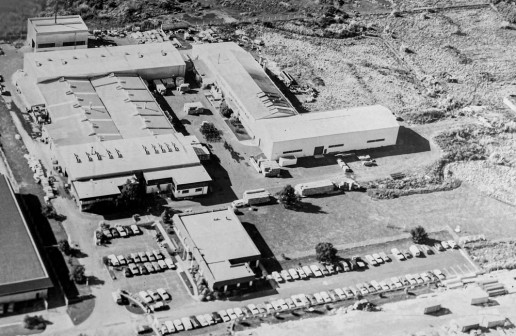
In mid-2023, we closed one of our manufacturing sites. Investment in new technology and efficiency improvements enables us to produce the same volume of product with one fewer site. In water usage alone, this change represents a saving equivalent to approximately 2,500 Olympic-sized swimming pools each year.
The closure of an older plant reliant on outdated processes represents a significant early step in our sustainability journey.
Updating our remaining manufacturing plant
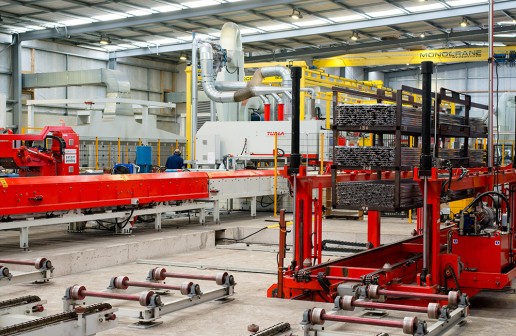
At our remaining manufacturing site, we’ve installed a new extrusion press line and a vertical paint line to improve operational efficiency and reduce energy, water, and chemical use.
In parallel, we are converting gas-burning furnaces to electric or induction furnaces. This transition supports a cleaner, more energy-efficient, and more controllable billet heating processes.
In addition, we are actively progressing rooftop solar at our main manufacturing site as part of our broader focus on improving energy efficiency and increasing the use of lower-emissions electricity where feasible.

Environmental Product Declarations (EPDs)
We are introducing Environmental Product Declarations (EPDs) to provide transparent, verified information about the life-cycle environmental impacts of our products.
EPDs are independently verified documents developed in accordance with international standards, including ISO 14025 and EN 15804+A2. They are based on Life Cycle Assessments (LCAs), which quantify environmental impacts across:
- Sourcing and transport of raw materials
- Manufacturing processes
- Transport to customers
- Product use
- End-of-life disposal, reuse or recycling
EPDs report indicators such as:
- Carbon footprint (global warming potential)
- Renewable and non-renewable energy use
- Water consumption
- Waste generation
They also assess additional environmental impact categories, including resource depletion, acidification, eutrophication and photochemical ozone creation. This information supports informed customer decision-making and enables benchmarking and continuous improvement.
An Environmental Product Declaration (EPD) for Altus® Aluminium and Window Systems is available here and may be updated as underlying data and methodologies evolve:
https://epd-australasia.com/epd/aluminium-window-systems/
Social Responsibility
Health, Safety, and People
Our operations are supported by a large and diverse New Zealand workforce. We are committed to providing a safe and healthy working environment and to supporting our people through responsible employment practices.
Altus® is an ACC Accredited Employer, reflecting a structured approach to health, safety, injury prevention, and rehabilitation for our workforce.
Communities
Altus® operates manufacturing and distribution activities across New Zealand and recognises its role as a local employer and industry participant. We aim to contribute positively to the communities in which we operate.
Responsible Sourcing and Materials
Low-Carbon Aluminium
All of our extrudable aluminium is sourced from Rio Tinto’s NZAS aluminium smelter at Tiwai Point, Southland. Powered by renewable hydroelectric energy from Manapouri Power Station, aluminium produced at Tiwai has a carbon footprint approximately four times lower than the global industry average.

Suppliers
We are communicating the importance of Environmental Product Declarations (EPDs) and responsible practices to our suppliers, with a focus on reducing Scope 3 emissions over time. Greater availability of verified data will support more informed procurement decisions.
Altus® is progressing toward Aluminium Stewardship Initiative (ASI) certification to provide independent assurance of responsible aluminium sourcing and stewardship.

Material transparency and Declare labels
Selected Altus® product systems, including Altus® Window Systems and Altus® Interior Systems, hold Red List Free Declare labels. Declare labels provide ingredient transparency and confirm that intentionally added ingredients do not include chemicals on the Living Building Challenge Red List.
These labels support informed product selection by customers seeking greater transparency around material health and composition.
Red List Free Declare labels for these products are available via the International Living Future Institute (ILFI) Declare platform:
https://declare.living-future.org/products/altus-aluminium-window-systems
https://declare.living-future.org/products/altus-interior-systems
Targets and Progress
Our sustainability programme is focused on continuous improvement. Current areas of focus include:
- Reducing operational greenhouse gas emissions through technology upgrades
- Improving efficiency in energy, water, and material use
- Expanding the availability and use of Environmental Product Declarations and other environmental labels
- Progressing toward ASI Performance Standard certification
Targets and metrics will be refined as data quality and coverage continue to improve.
Standards, Certification, and Transparency
Altus® aligns its sustainability approach with recognised frameworks, including the Aluminium Stewardship Initiative (ASI) Performance Standard. Some information on this page is based on measured and estimated data and will be updated over time as systems mature and new information becomes available.
Altus® operates an ISO 14001-certified environmental management system at relevant sites, supporting a structured approach to identifying, managing and continuously improving environmental impacts.
We aim to communicate our sustainability journey transparently, including both progress made and areas for further development.
Contact and Feedback
For sustainability enquiries or feedback, please contact: sustainability@altus.co.nz
This page will be reviewed and updated periodically as our sustainability programme evolves.